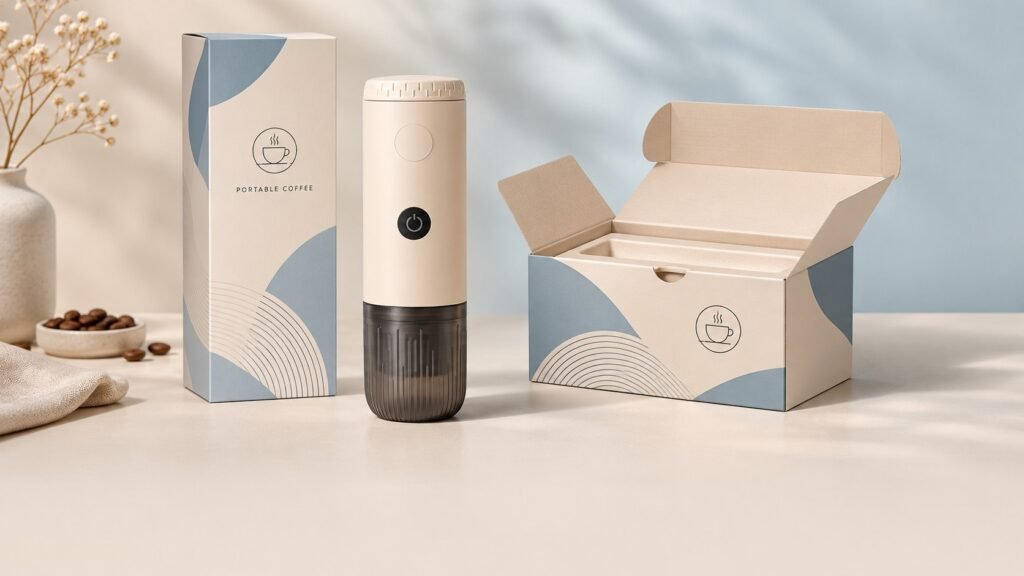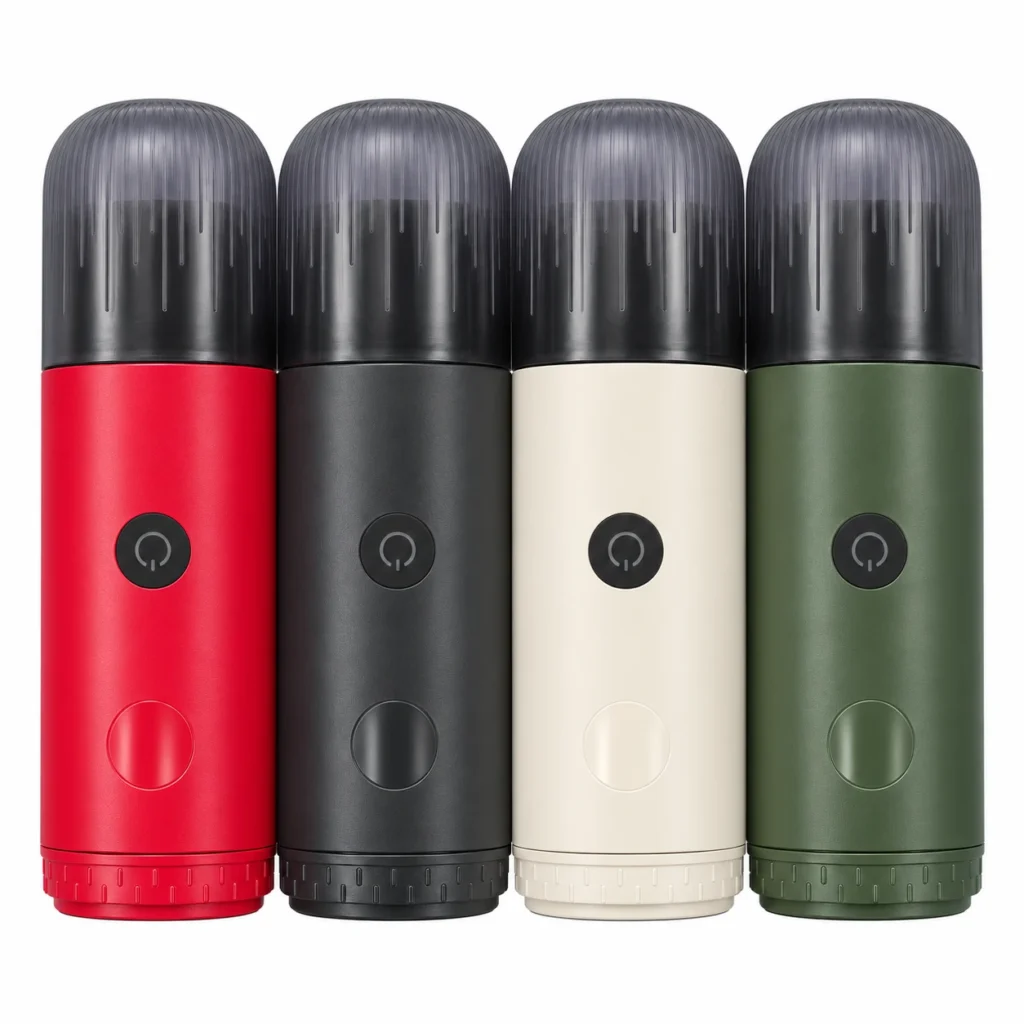
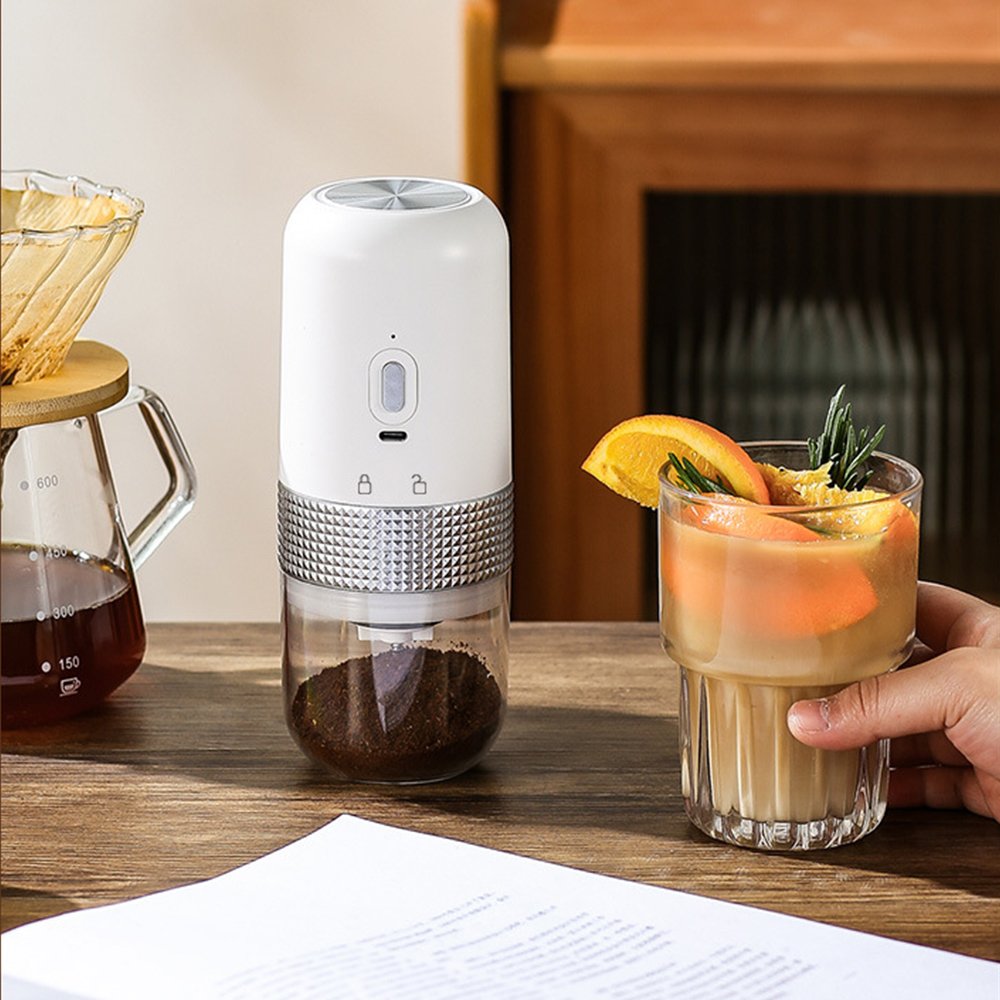
A useful portable coffee range starts with the customer’s preparation routine. Establish the coffee format, water requirements, power arrangement and cleaning steps of the lead product. Then add a grinder, frother or accessory only when it works with that routine. Matching colors alone does not establish a working bundle.
This guide is for brands, retailers, gift buyers and distributors building a compact coffee assortment. It explains the decisions to put in a sample brief without assuming that different portable appliances share the same operating limits or accessories.
Choose one clear use case for the lead product
| Customer routine | Lead buying question | What to evaluate on the sample |
|---|---|---|
| Coffee while travelling | Where do water, coffee and charging come from? | Setup, carrying the complete kit, cleaning and repacking |
| Compact home or office coffee | Which coffee format and preparation steps suit the user? | Ease of assembly, repeat use and where the parts are stored |
| Coffee-related corporate gift | Can a recipient understand the set without a sales demonstration? | Opening sequence, clear instructions and contents identification |
| Co-branded coffee collection | Which products belong in the brand’s intended routine? | Visual coordination plus actual compatibility of the items |
Write a one-sentence brief before choosing colors: for example, “a compact coffee kit for customers who already use ground coffee.” That sentence helps the team decide whether a grinder adds value, which accessories are necessary and what the instructions need to explain. Explore coffee and beverage applications for the product roles within the range.
Check the exact brewer configuration
Portable coffee makers can differ in coffee input, water preparation, assembly and power supply. Ask how the selected version works from beginning to end. In particular, establish whether the user must provide heated water or whether the exact model and mode perform heating. Do not infer heating capability from a charging port or the word “electric.”
- Coffee input: identify the supported ground-coffee holder or exact capsule system and adapter. A generic “capsule compatible” description is incomplete.
- Water and mode: obtain the operating instructions for the configuration being quoted.
- Power: confirm the model-specific input requirements, supplied cable and whether a power adapter is included.
- Assembly: check the cup, seals, holders and removable parts that the recipient must fit correctly.
- Cleaning: identify the removable washable parts and the electrical body that must be handled according to the manual.
For example, EcoBridge’s supplied ECO-CM2604 materials illustrate ground-coffee and capsule adapter configurations, a Type-C port and removable components. Those illustrations do not establish every capsule standard, charging specification or performance figure. Review the ECO-CM2604 model with the exact instruction and pack list before defining a bundle.
Choose a grinder for the intended brewing method
A grinder belongs in a whole-bean routine. If the collection is intended mainly for a capsule user, the brewer and required adapter may be the more relevant starting point. Decide what coffee the customer will actually buy and use.
Grind size affects extraction and flow, and an appropriate setting depends on the coffee and brewing method. Grinder manufacturer Baratza explains that changing brewing methods can require substantial changes in grind setting. This supports a practical buying check: evaluate the proposed grinder with the intended brewer instead of assuming any compact grinder is suitable. Baratza’s explanation of grind adjustments.
On a sample, check the usable adjustment range, grounds transfer, assembly and the cleaning process described for that grinder. Brew with the intended coffee and record the settings used. A convenient container shape or a similar product color does not demonstrate espresso suitability. Request current coffee grinder options with the brewing method in your enquiry.
Add a frother or pitcher with a defined purpose
A handheld frother can add a milk-mixing step to a coffee collection, while a suitable vessel helps the recipient perform that step. Establish whether the selected appliance mixes, froths or heats; do not combine those functions into one claim without the exact model documentation.
Try the intended milk or drink recipe in the proposed vessel following the product guidance. Check whisk clearance, comfortable handling, the working fill level and how the user cleans and stores the attachment. A container’s nominal capacity does not by itself define a suitable frothing fill level.
Also review the contents of the set. If a product photograph includes a pitcher, cup or stand for styling, confirm whether it is supplied. The box image and online listing should match the purchased configuration. For presentation choices, review product and packaging customization after the working combination is established.
Evaluate the complete customer journey
| Stage | Check | Keep as an approval reference |
|---|---|---|
| Open | Can the user identify the appliance, adapters and included accessories? | Final pack list and package layout |
| Prepare | Do the instructions explain the correct coffee format and power setup? | Instruction version and model reference |
| Use | Does each item support the intended routine when used as directed? | Sample observations and agreed configuration |
| Clean | Can the removable parts be handled and dried as the manual requires? | Model-specific cleaning instructions |
| Store | Can the complete set be repacked without losing small parts? | Approved insert and accessory positions |
Use the same approved configuration for photography, product copy and packaging artwork. Remove claims that belong to another model. For performance claims such as brewing temperature, battery runtime, cup count or pressure, obtain the supporting model data and test conditions before publishing numbers.
What to send for a coffee assortment enquiry
- Your destination market and intended sales channel.
- The customer routine: coffee format, where the product will be used and whether the set is for retail or gifting.
- The lead model and any grinder, frother or accessory you want evaluated with it.
- The proposed quantity and color split, plus ready-stock or custom preference.
- The complete contents, instruction language and branding requirements.
- The date the goods are needed and which sample decisions remain open.
EcoBridge supports ready-stock orders from 100 pieces and custom programs from 2,000 pieces. Its 200+ styles span the full portable appliance range. Start with portable coffee makers or send a coffee assortment brief to discuss a focused shortlist.
Common range-building questions
Does a portable electric coffee maker always heat water?
No single heating assumption applies to every portable electric model. Confirm the exact model, mode and water instructions before describing the customer’s preparation steps.
Can any electric grinder be paired with an espresso maker?
Do not assume that it can. Check the grinder’s intended brewing applications and evaluate the usable grind range with the selected brewer.
Does Type-C tell me the required charger or operating power?
The port shape alone does not specify the required input or supplied power adapter. Use the selected model’s electrical information and pack list.
Should every coffee gift set include a grinder and frother?
Only include items with a clear role in the recipient’s routine. Define the coffee input and intended drink first, then evaluate the complete set.